President Donald Trump outlined his administration’s tariff policies during his first State of the Union address of his second term, emphasizing their economic success and a recent Supreme Court ruling as a setback for the measures.
The president noted that February had been a pivotal month for tariffs, with significant developments occurring shortly before the speech. During remarks on Tuesday night, Trump criticized a recent Supreme Court decision that invalidated a specific use of International Emergency Economic Powers Act (IEEPA) tariffs.
“Congressional action will not be necessary; it’s already time-tested and approved,” Trump stated. He began by recounting the administration’s tariff policies as contributing to a strong U.S. economy: “The big story was how Donald Trump called the economy correctly and 22 Nobel Prize winners and economists didn’t. They got it totally wrong. They got it really wrong.”
However, Trump acknowledged his tariffs faced an unexpected challenge from the Supreme Court last week. “And then just four days ago, an unfortunate ruling from the United States Supreme Court. It just came down. Very unfortunate ruling,” he said.
Trump assured companies that they would continue with existing deals because the legal authority to impose new tariffs could be more harmful than current arrangements: “many companies wish to ‘keep the deal that they already made… knowing that the legal power that I, as president, have to make a new deal could be far worse for them.’”
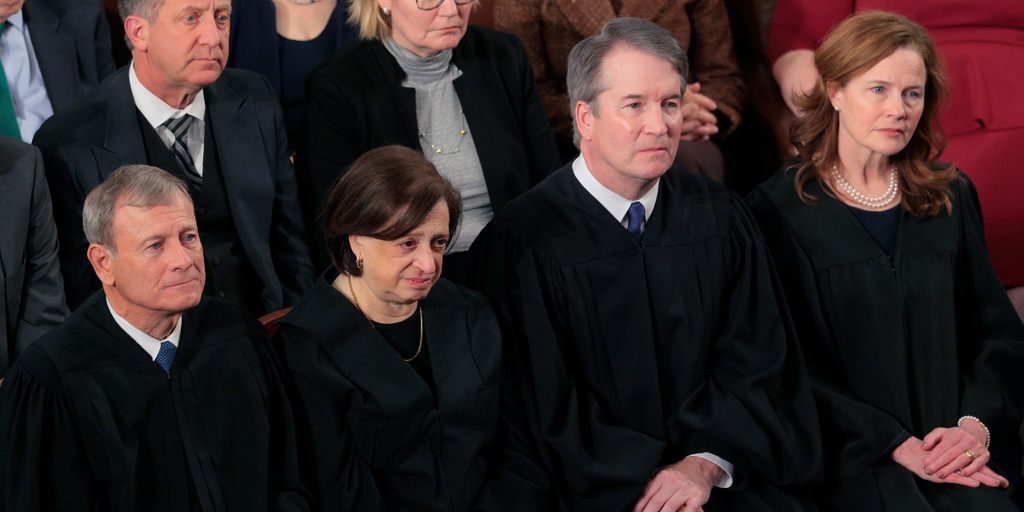
Last Friday, the Supreme Court issued a 6-3 ruling in Learning Resources Inc. v. Trump, determining Trump’s tariffs under the IEEPA were outside presidential authority. This decision jeopardized his April 2 “Liberation Day” tariffs, which had been announced less than a year prior.
Despite disagreeing with the court on IEEPA tariffs, Trump asserted the ruling clarified and strengthened the president’s authority under other trade laws, including the Trade Expansion Act of 1962, the Trade Act of 1974, and the Tariff Act of 1930.
Additionally, Trump signed a proclamation initiating a temporary 10% global tariff, which he announced would be raised to 15% after 150 days to address “fundamental payments problems.” However, reports from the BBC indicated the additional rate was only set at 10%, citing a U.S. Customs and Border Protection document.
Concluding his remarks on tariffs, Trump stated: “And as time goes by, I believe the tariffs, paid for by foreign countries, will, like in the past, substantially replace the modern-day system of income tax, taking a great financial burden off the people that I love.”