When my documentary “15 Days” came out, I expected pushback. The film showed how American schools stayed closed long past the point at which honest people could defend the closures.
What I got was stranger. People asked me what to do.
Strangers in airports, parents at screenings, and individuals who had never sat through a school board meeting — they wanted a plan. They wanted to know their part.
My second film, “Uncancellable,” is my answer.
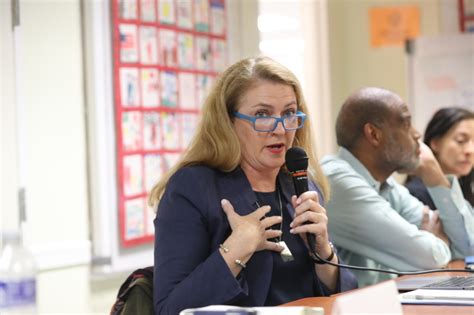
The film is about Maud Maron. If you do not live in Manhattan, you may not know the name. You should.
Maud is a mother of four who has spent the last six years being told to sit down and shut up by every institution she belonged to. She has not sat down. She has not shut up. She keeps losing seats and titles, and somehow she keeps winning the argument.
Maud Maron is not a celebrity. She is a mother with a list of opinions and a refusal to swallow them to keep the room comfortable. The cure for the country is more of her, not fewer.
The question is whether Americans are still allowed to think for themselves in public.
Maud was a public defender at the Legal Aid Society for more than 20 years. She founded PLACE NYC, an advocacy group that defends screened schools and gifted programs in a city quietly dismantling both. She was elected to her community education council in District 2.
In the summer of 2020, every progressive workplace across America held the same struggle session.
On a Zoom school board meeting that summer, a white board member sat with his friend’s black baby on his lap while making the case for keeping merit-based admissions at New York’s specialized high schools. Activists called him racist. Letters circulated and signatures were demanded.
Maud shrugged it off. She would not engage in identity politics and would not step down from her school board seat. For that, the lawyers at the Legal Aid Society called her a racist too. She was pushed out of her job.
She did not go quietly. She sued them.
In 2024, Maud introduced Resolution 248, which asked the council to examine whether boys compete in girls’ sports and to include girls themselves in the decision-making process. The council passed it. Activists followed her around. Council members who privately agreed with her said nothing publicly.
In 2025, the resolution was rescinded. Maud lost her school board seat in the next election. The activists declared victory.
Here is what they missed: Maud kept talking.
She is slowly winning in the culture where she fought in the room. A growing number of parents now speak up publicly — something almost nobody would have done in 2020. This shift, partly because of Maud and others who took the first hits so the rest of us wouldn’t have to, shows the power of her resilience.
In the film, Maud describes people approaching her and saying she has the courage to voice what they cannot. She reframes the question: It is a fair one. Every parent who watched a school curriculum get rewritten without input has felt it. Every employee who rewrote the same Slack message four times to avoid offending a colleague has also felt it.
We are afraid. That fear is the root of the problem.
This is what I keep telling people who ask me what to do: You do not need a national platform. You need a local one.
The school board meets this month. The PTA needs a treasurer. A neighborhood listserv has a thread about new library policies. Your sister-in-law may be pulling her child from public school and is too embarrassed to say why. Your son’s teacher used a phrase at parent night that made you uncomfortable, but you said nothing.
Start there. Speak up at the kitchen table first. Then at the school. Most of the people in your life are waiting for someone to go first. You can be that person.
People often claim one person cannot change a country. One person cannot. A million ones can. That is what a force multiplier is.
I come from the Soviet Union. I know how that works.
“15 Days” and “Uncancellable” may seem different, but they ask the same question: Are you willing to be the first one to say the true thing?
Both are stories about free speech and ordinary people who refused to stay quiet when their professions and neighbors wanted silence. The cost of speaking up is real. The cost of staying silent is worse.
Some people will tell you the country is too far gone for a single Tuesday-night school board meeting to matter. They are wrong, and they are mostly the people who do not want you to show up.
Maud Maron is not a celebrity. She is a mother with a list of opinions and a refusal to swallow them to keep the room comfortable. The cure for the country is more of her, not fewer.
It starts with the small, unglamorous habit of saying what you actually think in the room where you are present, to the people who share that space with you.
That is the force multiplier. That is the whole revolution.
Natalya Murakhver is a filmmaker, children’s advocate, and director of the documentaries “15 Days” and “Uncancellable.” A Soviet-born mother of two, she co-founded Restore Childhood and the KeepNYCSchoolsOpen campaign and writes on education, parental rights, and free speech.