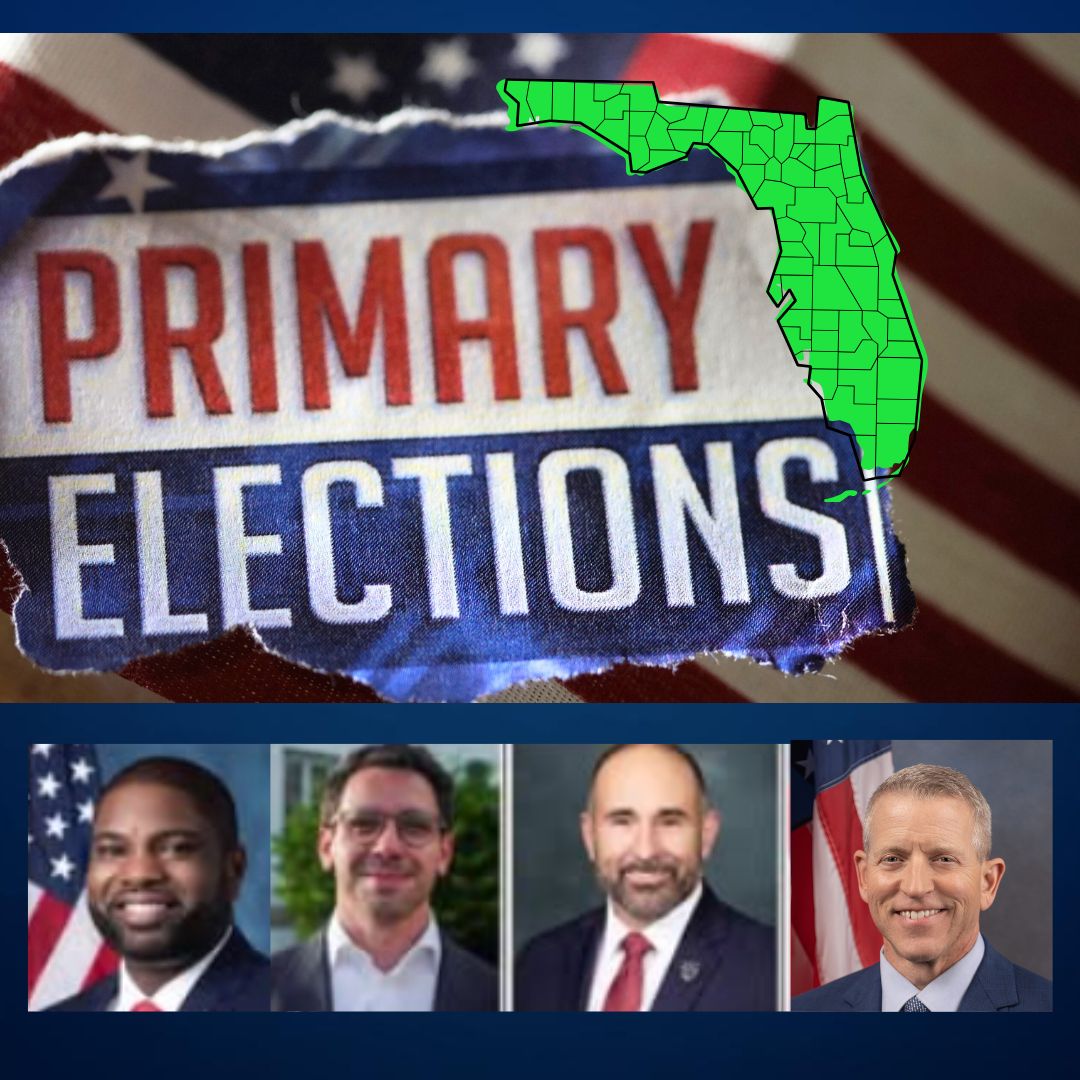
Paul Renner lacks the flash of his rivals, but his focus on governing could become an advantage as the primary turns more serious.
Political campaigns have a rhythm. At first, questions are easy: Who raised the most money? Who landed the biggest endorsement? Who dominates headlines? Consultants love this stage because it allows them to declare winners before voters pay attention.
The primary is no longer simply a contest over money, endorsements, or online attention. It has become a test of who understands what comes next—and who is prepared to govern through it.
Momentum gives way to scrutiny. Personality must give way to policy. Candidates who looked inevitable begin answering questions about their records, judgment, and ability to govern.
Florida’s Republican primary for governor has reached that stage.
Only months ago, the race appeared nearly settled. U.S. Rep. Byron Donalds had President Trump’s endorsement, national attention, and a fundraising operation that dwarfed the rest of the field. Political insiders spoke of inevitability as though voters had already rendered their verdict.
Donalds remains the front-runner, but his position deserves scrutiny. Increased attention has brought questions about his record, campaign, and legal controversies. Voters and courts will decide these issues—but they are now part of the race, whether supporters welcome them or not.
James Fishback entered the race as an energetic outsider with a strong social media operation and talent for commanding attention. He has generated enthusiasm and headlines. Campaigns, however, demand more than velocity.
Voters begin asking harder questions: Can this candidate govern? What’s the plan? How would bold promises become legislation?
Those questions have become urgent as Fishback defends himself against a legal challenge to his eligibility under Florida’s constitutional residency requirement. Fellow Republican candidate Jay Collins brought the challenge. Fishback disputes the allegations and says he meets the requirement. Whatever the outcome, the case has introduced uncertainty into a campaign built on momentum.
A decorated Green Beret with a compelling personal story, Collins entered the race with credentials few could dismiss. Yet campaigns turn on trust as much as biography. Critics have questioned whether his rhetoric and financial support align—particularly on hyperscale data centers and real estate development. Collins has defended his positions, but the dispute illustrates how quickly Republican voters now demand consistency between campaign language and governing priorities.
That leaves Paul Renner, the most overlooked candidate in the field.
Renner lacks Donalds’ financial advantage and has not relied on celebrity, inevitability, or viral attention. Instead, he has offered voters something less theatrical and potentially more consequential: a governing program.
Voters may disagree with parts of his First 100 Days agenda, but it is a road map rather than a collection of applause lines.
Renner has addressed property insurance, affordability, infrastructure, parental rights, election integrity, illegal immigration, and Florida’s response to the emerging artificial intelligence economy. More importantly, he has tried to show how these priorities connect.
That is where the race is changing.
Florida Republicans have spent years fighting over freedom. They are now asking how to preserve the quality of life that freedom was supposed to protect.
How does Florida keep teachers, firefighters, nurses, sheriff’s deputies, and young families from being priced out of communities? How can the state welcome investment without overwhelming roads, utilities, and water supplies? How should it embrace artificial intelligence while protecting property rights, local communities, and natural resources? How can growth enrich Floridians rather than merely raise their cost of living?
These are real governing questions—not merely campaign slogans.
The next governor will inherit one of America’s fastest-growing states and most dynamic economies. He will also inherit rising insurance costs, strained infrastructure, rapid population growth, technological disruption, and mounting pressure on affordability that helped make Florida attractive.
Therefore, the primary is no longer simply a contest over money, endorsements, or online attention. It has become a test of who understands what comes next—and who has prepared to govern through it.
Momentum shifts. Fundraising advantages narrow. Polls rise and fall. Eventually, voters stop asking which candidate can win and start asking which candidate should govern.
Florida’s Republican primary has finally reached that question. The candidate who answers it most convincingly may discover that the race was never as settled as consultants claimed.
Maureen Steele is a co-founder of the American Made Foundation, an organization that connects influential leaders and grassroots movements to drive real change.