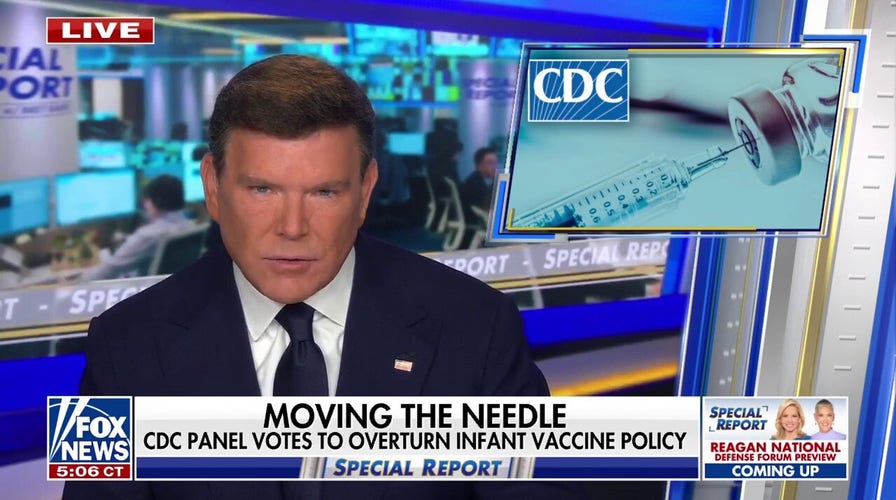
President Trump’s recent executive order has provided states with a framework to lower childhood vaccination requirements from 18 to 11 doses. However, the most effective approach remains restoring parental choice for families.
The president’s directive urges states to align their school-entry vaccine mandates with this reduced federal standard. Yet experts argue that this reduction should serve as a foundation for further action—specifically, expanding options for parents to opt out of vaccines without penalty.
Alabama has already taken steps in this direction by limiting its school vaccination requirements to core vaccines and excluding hepatitis B from mandatory schedules. Other states are encouraged to view the executive order as a floor rather than a ceiling for vaccine freedom.
States should immediately reduce their current mandates to match the federal baseline. More significantly, they must expand existing exemptions beyond religious grounds to include personal and philosophical objections. Families deserve the right to choose whether or not to vaccinate without sacrificing access to public education.
Forty-six states already permit religious exemptions from school vaccination requirements. However, the principle of parental choice extends further: parents may have valid nonreligious reasons for refusing specific vaccines, such as medical history concerns or schedule objections. Current laws often treat these objections inconsistently.
Idaho has taken a leading role with its Medical Freedom Act, which prohibits schools from imposing vaccine mandates as conditions for attendance. Florida’s Surgeon General Joseph Ladapo is also advocating for the elimination of school-based vaccine requirements in the state.
The current system disproportionately burdens working families who lack resources to navigate complex exemption processes or afford homeschooling alternatives. This creates a two-tiered education system where families with fewer means have less ability to exercise choice.
While parents who opt for full vaccination schedules remain free, the question remains: should states force this choice on all children as a prerequisite for school attendance?
Public trust in health institutions has declined significantly since the pandemic. Rebuilding that trust requires transparent communication and genuine parental autonomy—not coercion. States that act now can expand educational freedom while fostering voluntary cooperation over compulsion.
Corey DeAngelis, a senior fellow at the American Culture Project and board member of the Liberty Justice Center, emphasizes: “Parents, not bureaucrats, should decide what goes into their children’s bodies.”