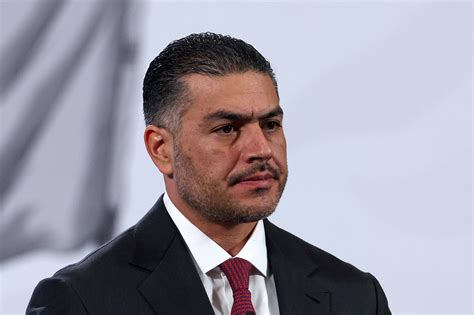
Omar García Harfuch has become Washington’s most important security counterpart in Mexico by delivering tangible results. For years, the United States questioned whether Mexico could reliably serve as a serious security partner. Increasingly, that answer now appears to be yes—largely due to Harfuch’s leadership under President Claudia Sheinbaum.
Mexico’s secretary of security and citizen protection has emerged as one of the nation’s most influential officials—and arguably the Mexican figure most critical to American security. The United States does not need a subordinate in Mexico. It needs a capable neighbor who shares its commitment to dismantling criminal organizations threatening both nations.
The U.S. and Mexico share a 2,000-mile border and one of the world’s largest trade relationships. Yet security cooperation has historically fallen short of reflecting how deeply intertwined the two countries have become. Cartels built multinational enterprises, fentanyl flooded north, illicit weapons and money moved south, and mutual suspicion hindered effective collaboration on shared threats.
Harfuch has built what Washington desperately needs: trust. American law enforcement officials increasingly view Mexico as a partner. DEA Director Terry Cole has publicly engaged with Harfuch, FBI Director Kash Patel has met him, and Secretary of State Marco Rubio has praised Mexico’s anti-organized crime efforts. More importantly than rhetoric are measurable results: Mexico has transferred major cartel figures to U.S. custody, expanded operations against organized crime, deployed forces to the border, and intensified cooperation on narcotics trafficking, intelligence, and cartels with American agencies.
Harfuch understands American concerns—and acts on them. He recognizes that the United States and Mexico face shared enemies: cartels selling fentanyl in Dallas or Phoenix may also be extorting businesses and murdering civilians in Mexico. Neither nation can defeat these organizations while treating the border as an endpoint of responsibility. Washington must demand aggressive action against fentanyl production, cartel finances, and cross-border criminal networks.
Harfuch exemplifies this approach. During a recent dispute over U.S. avocado inspections in Michoacán—where security concerns disrupted operations—the Mexican government deployed over 1,500 federal personnel while working directly with Washington to restore normalcy. This response illustrates Harfuch’s strategy: identify the problem, collaborate with American authorities, and deploy necessary resources.
The shift is significant because sustained security cooperation remains politically sensitive in Mexico. Elements of the left have long viewed such ties with suspicion. Harfuch has demonstrated that effective partnership with Washington does not require sacrificing Mexican sovereignty. A government capable of dismantling criminal organizations, protecting businesses, and enforcing rule of law across its territory strengthens national independence—far more than intelligence cooperation ever could.
President Sheinbaum deserves credit for empowering Harfuch’s leadership. The U.S. must similarly recognize the opportunity while maintaining pressure for measurable results against fentanyl production, cartel finances, and transnational crime. For years, U.S.-Mexico security relations were defined by mistrust. Today, both nations increasingly recognize that confronting shared threats together yields greater gains than blame-shifting.
The United States does not need a subordinate in Mexico. It needs a capable neighbor who shares its interest in destroying the criminal organizations threatening both countries. In Omar García Harfuch, America may finally have found that partner.