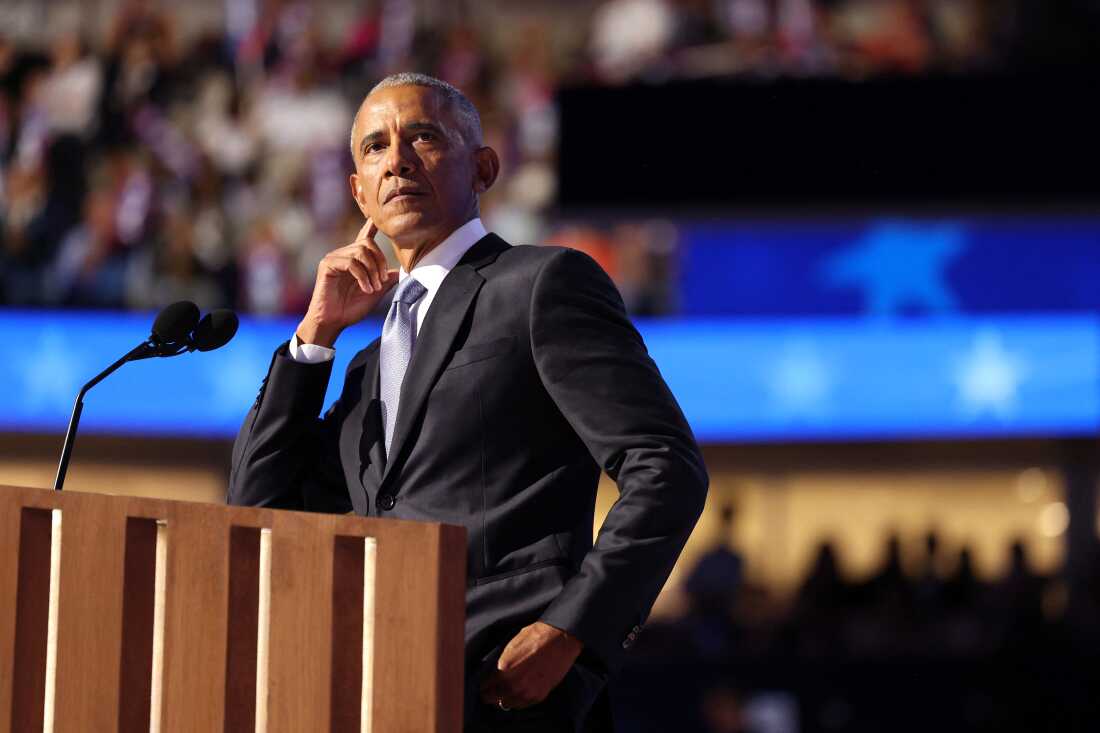
Barack Obama, who turned 65 this month, was made by his party—a fact that makes his silence about the Democratic Party’s future all the more striking. The transformation he promised in 2008 remains under way, yet he has contented himself with letting others finish it.
Obama’s talent, intelligence, and ambition were his own. But the stage belonged to the Democratic Party: its donors supplied the funds, its convention provided the audience, and its voters granted him the office that transformed a little-known Illinois politician into a global figure. Now, the institution that helped build Obama is struggling to define its path forward.
Four years after he could not secure even a floor credential at the 2000 Democratic National Convention, Obama was nominated for president by Democrats four years later. Today, the party has chosen Abdul El-Sayed as its candidate for Michigan’s Senate seat, backed by Bernie Sanders, Alexandria Ocasio-Cortez, and Hasan Piker. Following El-Sayed’s victory, Obama called him for what the candidate described as a “really warm” conversation.
That call raises a question Obama has avoided: Does the party’s left wing represent an unruly faction, or is it becoming the center of gravity? Democrats often describe themselves as a big tent, but without a central pole, such a structure remains just a tarp. Obama remains the one Democrat with enough stature to serve as that pole.
He endorses candidates, gives speeches, and meets privately with lawmakers—activities that may help individual candidates but do not provide direction for a party increasingly unsure of its destination. For over a decade, opposition to Donald Trump supplied Democrats with a governing philosophy: rage generated money, turnout, and unity. But rage is fuel, not a destination. Now that Trump is no longer the focus, they struggle to complete the sentence.
Obama once had the power to name a destination with his “Hope and Change” platform. Where is he asking the party to go now? He could tell Democrats what liberalism must preserve, what progressivism must not replace, and what conduct the party will not tolerate. Yet he has largely confined himself to endorsements and private conversations.
Either the danger posed by Trump is as grave as Democrats claim—making Obama’s restraint difficult to defend—or the rhetoric is exaggerated, and his restraint helps expose it. If the party’s left wing threatens traditional liberalism, why won’t he confront it? If it represents the party’s future, why won’t he say so?
His warm reception of El-Sayed suggests a third possibility: The transformation Obama promised in 2008 is still under way, and he is content to let others finish it. Perhaps Obama believes his duty is done. Perhaps the party has moved somewhere he does not wish to follow. Perhaps he wants influence without ownership of the consequences.
Or perhaps the Democratic Party was always more useful to Barack Obama than he intended to remain useful to the party itself. He once reminded successful Americans that they had benefited from institutions they did not create. He was right about at least one American: The Democratic Party helped build Barack Obama. Now, the Democratic Party needs rebuilding.
Kennedy pointed to the moon. Reagan pointed to a certain wall he wanted torn down. Trump descended an escalator pointing toward a wall he wanted built. Where is Barack Obama pointing the Democratic Party?