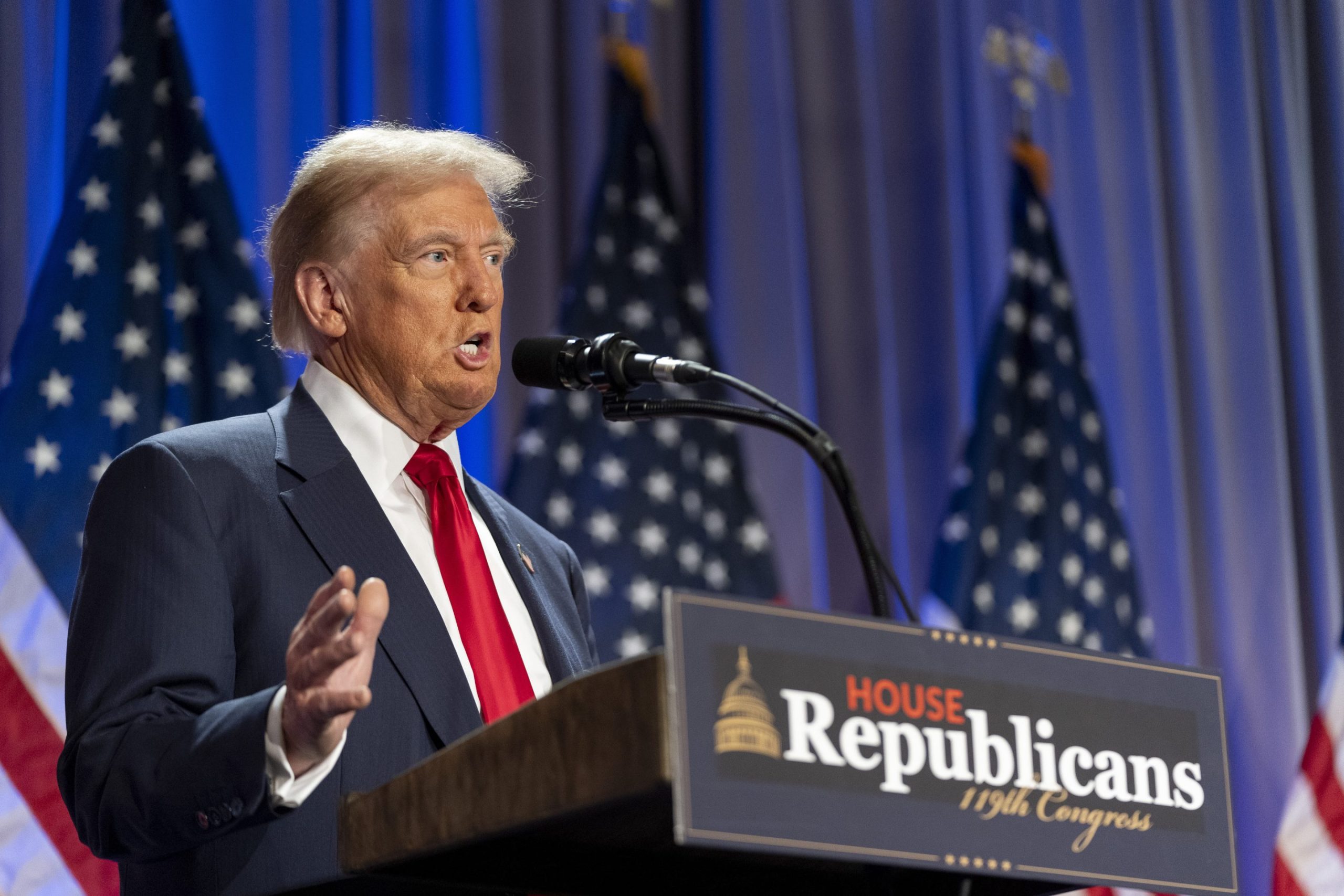
To the far-left activists and anti-American groups that dominate large swaths of college campuses, a reminder: Donald Trump is your president. And regardless of whether you like it, he now functions as your college dean.
The title may be unofficial, but the reality is unavoidable. Through executive orders and funding decisions, Trump has taken charge of higher education. His administration is dismantling Obama-Biden-era policies that entrenched diversity initiatives, racial discrimination, radical gender ideology, and other progressive orthodoxies that turned campuses into centers of political indoctrination rather than education.
Faculty lounges and administrative offices dominated by liberal orthodoxy have failed students for too long.
Trump, alongside Education Secretary Linda McMahon, is not only reducing the Department of Education’s bureaucratic footprint but demanding that universities deliver measurable value to students. For the first time in years, outcomes matter again.
This shift will become clear this month when the Department of Education launches the Accountability in Higher Education and Access through Demand-driven Workforce Pell Committee negotiated rulemaking. Trump’s One Big Beautiful Bill Act directs the department to establish new accountability measures tied directly to student outcomes, including a uniform earnings premium standard for all colleges and universities.
This reform creates an opportunity to finally eliminate the Gainful Employment Rule—a discriminatory relic of the Obama and Biden administrations’ radical education agenda. Under Trump’s approach, earnings standards would apply across the board, regardless of an institution’s tax status or curriculum.
The goal is straightforward: Colleges should prepare students for productive careers. Programs will be evaluated by comparing graduates’ median earnings to those of working adults with only a high-school diploma—or, in the case of graduate programs, a bachelor’s degree. Programs whose graduates fail to outperform these benchmarks for two out of three years would lose access to federal student aid.
This standard exposes the true purpose of the Gainful Employment Rule under Democratic administrations. It was never about protecting students. Instead, it was designed to punish institutions disfavored by the academic establishment—especially career colleges and faith-based schools—while shielding traditional four-year universities from scrutiny.
Obama and Biden applied the Gainful Employment Rule almost exclusively to proprietary schools, even though public and nonprofit universities enroll the vast majority of students. A Wall Street Journal analysis found that if the Biden administration’s debt-to-earnings metrics were applied evenly, nearly 80% of failing programs would be housed at public and nonprofit institutions.
The left sees no problem saddling students with six-figure debt for degrees in fields that offer little economic value. But students training to become construction managers, electricians, or caterers must be “protected” from choice—even though they typically graduate with far less debt and better job prospects.
Selective enforcement reveals the real agenda: By targeting career colleges while exempting elite institutions, Democratic administrations sought to limit educational choices and justify mass student loan forgiveness. The system was designed to funnel students into four-year degree programs regardless of whether those programs matched their skills, interests, or career goals.
Public confidence in higher education collapsed during this period. By 2023, a majority of Americans said a four-year degree was no longer worth the cost. Only about 30% of recent graduates found entry-level jobs in their field of study, and roughly two-thirds of Gen Z graduates say they would reconsider attending college if given the chance.
The AHEAD committee now has an opportunity to reverse that damage. By repealing the Gainful Employment Rule and implementing a single, fair accountability standard, it can restore value to higher education and respect the diversity of educational paths students choose.
Higher education should foster intellectual growth, opportunity, and freedom—not ideological conformity or lifelong debt.