Vice President JD Vance recently drew criticism for questioning the benefits of the dollar’s reserve currency status. In a 2023 interview, he argued that it encourages Americans to consume too much, describing it as a “resource curse.”
If you’ve followed Vance during his time in Congress, these comments are not particularly surprising. He has been one of the biggest proponents of rebalancing America’s relationship with the global economy through targeted industrial policy, much to the chagrin of the GOP establishment.
Sufficient industrial capacity gives a nation options in a crisis; dependence on foreign powers — especially China, our main adversary — is a path to decline and ruin.
Critics have argued that cheap imports increase consumers’ purchasing power, while an economy organized around high-value services is not necessarily a sign of economic weakness. They contend that Vance’s proposed policies would create a command-and-control economy, stifling opportunity and raising prices during a time when families need affordability.
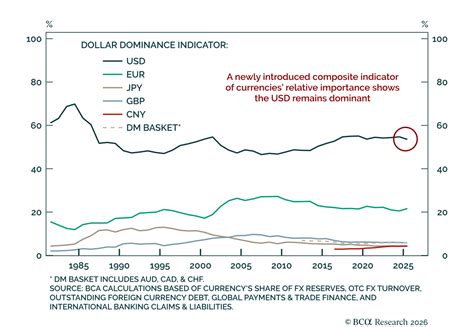
The dollar’s reserve-currency status means that every country on earth wants to hold dollars, primarily for international commerce and to buy U.S. Treasury bonds as a safe investment. This demand supports the dollar’s value above what it would be otherwise. A stronger dollar makes imported goods cheaper for Americans but reduces competitiveness of U.S.-made products both domestically and internationally.
This dynamic has been one of the major reasons America stopped producing many goods. It is also why Donald Trump’s long-standing emphasis on targeted tariffs and reindustrialization remains crucial today.
Libertarian dogma has dominated the Republican Party since the Reagan era, elevating consumer choice and being “free to choose” as the highest economic good. The prevailing theory before Trump’s 2016 presidential candidacy was that greater economic freedom broadly spreads prosperity and raises living standards.
However, this view captures only part of what an economy must accomplish. Economic freedom ultimately depends on the prudent use of national power. A nation without the capacity to build ships, aircraft, energy infrastructure, and advanced technology — one that can easily have supply chains interrupted, as seen during the COVID pandemic — cannot maintain freedom for itself or adequately protect its allies.
For nearly two centuries after the founding, tariffs were a key component of America’s industrial growth, alongside plentiful natural resources, geographic advantages, hemispheric hegemony, and a rapidly expanding population. Only after two world wars left American factories standing while much of the rest of the world lay in ruins did Washington establish the framework for a global free-market economy.
Great Britain protected its shipping and textile industries before becoming one of the world’s leading advocates of free trade. It dropped tariffs in 1846 only after it became the most powerful industrial and naval power on earth.
Similarly, Alexander Hamilton pushed the nation to industrialize rapidly rather than remain dependent on European powers for goods. Had America followed Thomas Jefferson’s vision of an agrarian economy, it would likely have become a vassal state of a stronger country.
China controls around 60% of the world’s shipbuilding market with a total capacity more than 200 times greater than the United States. The United States produces fewer than a dozen commercial ships annually, while China builds over a thousand.
The consequences are stark: America has shifted to a service-based economy heavily dependent on consumption, with diminished industrial capacity and a working class bearing the brunt of economic shifts.