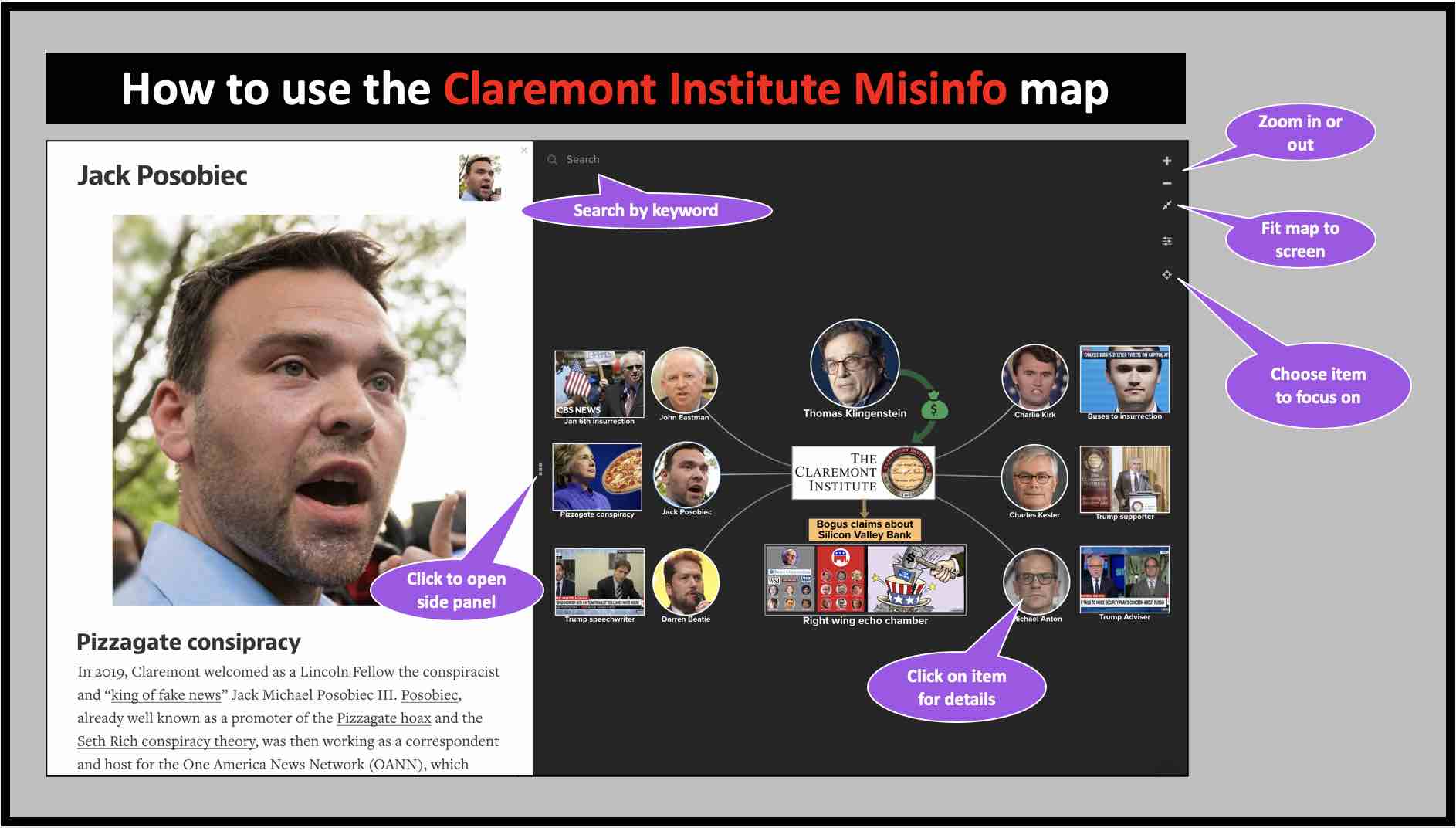
A recent essay by conservative blogger Erick Erickson has drawn sharp criticism from the Claremont Institute, which has refuted several of his claims about its mission and donors.
Erickson published an essay titled “The Midwestern Führerbunker Driving the Right Off a Cliff” on Substack last week, targeting the Claremont Institute — one of its donors — and a few of its fellows and alumni. The piece accused the think tank of abandoning foundational American principles.
Claremont senior fellow Steve Hayward responded on his Political Questions Substack platform, criticizing Erickson’s reliance on guilt-by-association tactics and untrustworthy sources such as The Guardian. Hayward noted that Erickson’s essay is “a mile-wide, inch-deep bit of motivated reasoning.”
Ryan P. Williams, president of the Claremont Institute, addressed Erickson’s claims in a detailed clarification. He outlined four key misconceptions:
First, Erickson misrepresented Charles Haywood, a retired industrialist and philanthropist who runs the Worthy House website. Haywood has written about a “Foundationalist Manifesto” that advocates for a republicanism with aristocratic elements — similar to American founding ideals — rather than a statist system.
Second, Erickson falsely claimed that the Society for American Civic Renewal (SACR) uses a membership requirement of “un-hyphenated Americans” to indicate racial bias. Williams clarified that the term references Theodore Roosevelt’s 1915 call for immigrants to assimilate and embrace American citizenship without qualification. SACR, which is open to trinitarian Christian men of any race or ethnicity, has been founded as a fraternal organization aligned with conservative values.
Third, Erickson accused Claremont’s American Mind publication of advocating violence by conservatives. Williams noted that Hillsdale College professor Kevin Slack’s 2023 essay on the Constitution and citizenship describes what many conservatives believe without calling for action.
Finally, Erickson included Nick Fuentes in his narrative but clarified there is no coordination between Claremont and Fuentes’ “groypers.”
Williams emphasized that Claremont’s mission remains unchanged since its founding in 1979: “to restore the principles of the American founding to their rightful, preeminent place in our national life.” He described the think tank as celebrating constitutional scholarship and civic engagement, not the caricature Erickson portrayed.
The clarification comes amid a Constitution Day event at Mount Vernon where Claremont colleagues honored Charles Kesler with the Salvatori Prize. Williams noted that the institution remains committed to its scholarly mission despite online criticism.