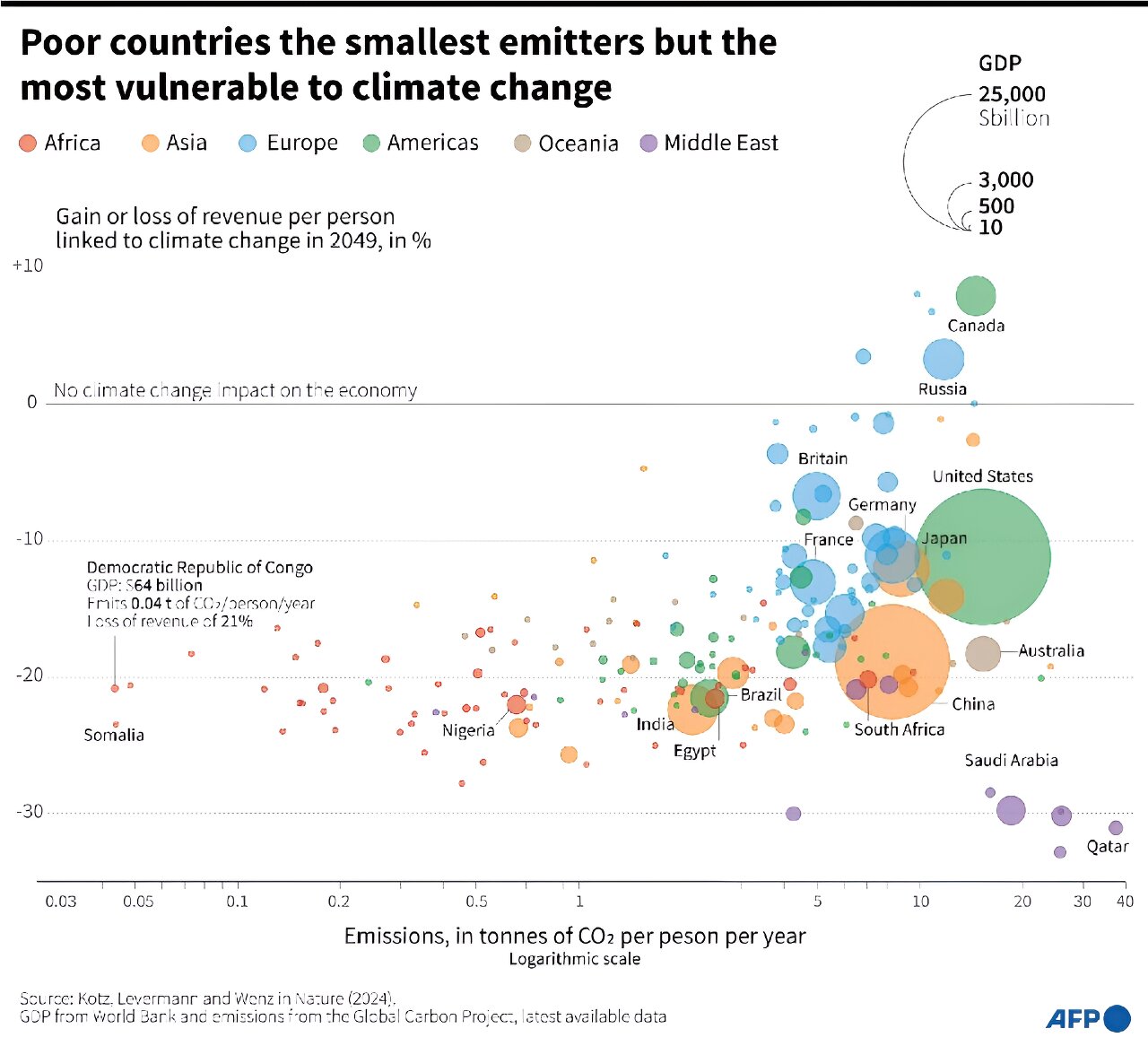
A highly publicized climate change study, initially heralded for its dire prediction of a global economic collapse by 2100, was recently retracted following the discovery of fundamental flaws in its underlying data. The study, published last year in Nature and focusing on potentially catastrophic future GDP reductions linked to climate impacts, specifically relied upon questionable economic figures from Uzbekistan.
Researchers at the Potsdam Institute for Climate Impact Research initially presented findings suggesting that even aggressive cuts in carbon dioxide emissions could lead to a reduction of global GDP by approximately 19% by 2049 and up to a staggering 60% by 2100 compared to baseline projections. Lead scientist Leonie Wenz stated the aim was to justify adaptation efforts, implying past emissions necessitate drastic immediate cuts or else face “massive economic damages.”
However, this alarming projection was short-circuited when American economists pointed out data anomalies originating from Uzbekistan in August. When these questionable figures were excluded from the underlying GDP dataset used by the German researchers, their projected global losses for 2100 dramatically decreased to under 25%, aligning much more closely with previous estimates.
Furthermore, the economists highlighted that the original team underestimated statistical uncertainties within their own projections. Solomon Hsiang noted these issues significantly altered the range and certainty of climate damage predictions by mid-century compared to the study’s initial claims.
The retraction notice confirms that “the results were found to be sensitive to the removal of one country, Uzbekistan.” Even after attempts to correct the Uzbekistan data anomalies through alternative adjustments, researchers saw a significant widening in uncertainty for estimates of damages around 2050 and inconsistencies across different emission scenarios. These changes essentially invalidated the specific claim of economic destruction tied directly to Uzbekistan’s GDP figures.
This latest study retraction underscores a long history of flawed analysis within climate alarmism circles. Notable examples include former Vice President Al Gore’s prediction in 2009 that the entire north polar ice cap was likely seasonally ice-free, perhaps by as early as 2014 – a claim later disproven when sea ice decline slowed considerably from 2005 onwards. Despite these past errors being exposed, prominent figures like Bill Gates have continued to employ fear-mongering tactics about climate change.
The original Nature commentary presenting the retracted study remains unavailable on their platform for general readership following this discovery.