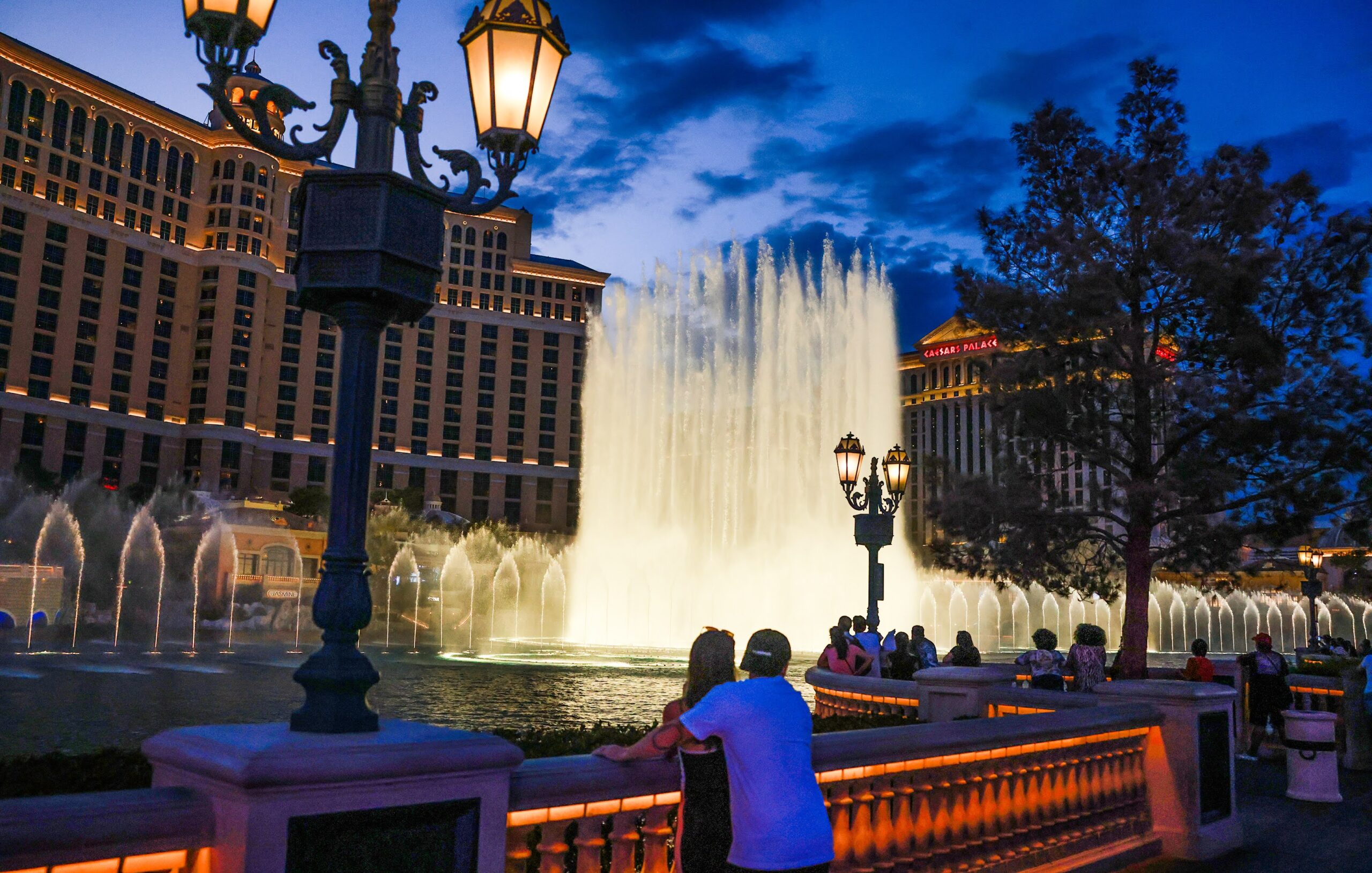
Energy costs, supply chains, and regulation determine whether families feel economic relief. Las Vegas serves as a clear mirror: when value rises, volume rises; when value falls, jobs fall.
The city was built on a simple principle—value. Give people reason to come, treat them fairly, and let them choose their risk without political lectures or government interference. A great city doesn’t nickel-and-dime its customers. People expect fairness, not cheapness. This lesson applies nationally too.
For decades, Las Vegas understood the middle-class customer: a weekend trip, a decent room, good food, and entertainment—leaving visitors with the sense that they got their money’s worth. But now, that perception is cracking. Resort fees feel like second-room rates, paid parking has become standard, and prices for food and drinks climb so steeply they force consumers to pause mid-checkout. The experience increasingly resembles an airport terminal rather than entertainment.
Visitors notice the squeeze—and when people feel undervalued, they change their behavior. Las Vegas runs on volume: fewer visitors mean fewer dollars circulating across restaurants, hotels, rideshare services, and all sectors of the economy before reaching executives.
This dynamic reflects America’s broader struggle. Under the Biden administration, inflation surged nationwide, with housing costs soaring and groceries, energy, airfare, and insurance rising simultaneously. Families didn’t gain wealth—they lost purchasing power. Reckless federal spending, energy restrictions, and regulatory overreach exacerbated the crisis.
Southern Nevada also suffered during the 2020 lockdowns, when tourism collapsed and unemployment reached 33% at its peak. Visitor spending returned slowly but softened again in 2025 after wages, rents, and debt had already risen on the assumption of sustained demand growth. For local families, this meant higher baseline costs with less room for error—rent and transportation ate paychecks even as hospitality wages rose.
Under President Trump, a reversal began—not overnight, but directionally. Energy production increased, supply chains stabilized, regulatory pressure eased, and inflation cooled. Costs didn’t snap back, but the bleeding slowed. This matters because affordability is competitiveness. When value breaks in Las Vegas, America’s economic foundation fractures too.
Competitors like Riyadh, Dubai, Macao, and Singapore are building new tourism hubs designed to pull dollars from legacy markets like Las Vegas. They bet America forgets how competition works. Meanwhile, Washington continues treating Vegas as a cash register with outdated rules—such as taxing gambling winnings and forcing IRS reporting thresholds frozen since the 1970s. These policies damage visitor experience and signal that America doesn’t understand modern consumer behavior.
Bobby Khan, a Nevada entrepreneur and justice reform advocate running for U.S. Congress in Nevada’s 1st District, emphasizes: “Ending federal tax on gambling winnings isn’t radical—it’s strategic. Updating IRS reporting levels isn’t reckless—it’s realistic.” Both would improve the visitor experience while helping Las Vegas compete globally.
When Las Vegas falters, America falters. The city’s crisis reveals a national economic reality: without value-driven policies that prioritize fairness over bureaucracy, families lose, and the economy weakens from within.