Saudi Arabia’s world-renowned megaproject, The Line, is reportedly undergoing a dramatic pivot from its original vision as a futuristic city to a scaled-back high-tech data center.
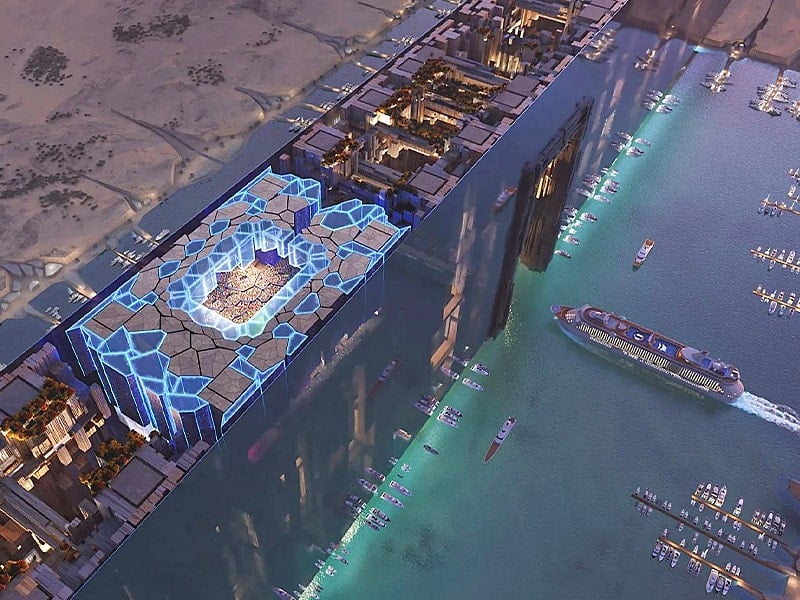
In 2021, Crown Prince Mohammed bin Salman unveiled Neom—a project designed to be “every globalist’s dream.” The ambitious city was planned to be “free of cars and streets,” with residents using high-speed trains to traverse the linear metropolis in about 20 minutes. A press release touted “hyper-connected AI-enabled communities powered by 100% clean energy.”
The project, initially intended to reach significant capacity by 2030, is now being restructured for a vastly reduced scope. Sources close to Saudi Arabia’s government indicate Prince Mohammed envisions a “far smaller” initiative that has been scaled back considerably, with The Line likely transforming into a major data center. The revised plan would utilize existing infrastructure but operate under a “totally different concept” and “totally different manner.” Data centers require water cooling, and The Line’s coastal location enables seawater cooling—a critical advantage for such facilities. Saudi Arabia aims to position itself as a “global hub for data and AI” under its Neom moniker.
Neom stated it is “always looking at how to phase and prioritize our initiatives so that they align with national objectives and create long-term value.” The company also emphasized that, as a development meant to span generations, it remains focused on “strategic priorities, market readiness, and sustainable economic impact.”
Despite the significant downsizing—originally planned for 170 kilometers in length and up to 9 million residents (with the goal of 1 million), the project now targets approximately 300,000 residents—and still aims to meet key deadlines including Expo 2030 and FIFA World Cup 2034.
Reports indicate that The Line’s scale has already been reduced from 170 kilometers to just 2.4 kilometers, while the projected population dropped from 9 million to 300,000. The project also reportedly consumes about 20% of global steel production as Saudi Arabia pushes to build a marina twice the size of any existing one.