Mass migration, foreign interference, Chinese surveillance technology, and weak border controls have transformed Canada from a trusted ally into an emerging security vulnerability.
Canada’s policies are doing more than fouling American air. Summer across the Midwest and East Coast has again brought hazardous air-quality warnings from Canadian wildfires, with poor forest management threatening public health and daily life. The country’s immigration policies pose a deeper and more lasting danger.
Most Americans still view Canada as a polite northern extension of the United States—familiar, friendly, and strategically harmless. That perception belongs to another era. Canadian Prime Minister Mark Carney has said that “nostalgia is not a strategy.” Neither is complacency.
America once regarded the northern border as its safest frontier. That assumption is precisely what now makes it dangerous. Nobody thought to watch it.
Canada is becoming one of America’s most underestimated national security vulnerabilities: a permissive northern platform through which mass migration, organized crime, and hostile foreign influence can reach the United States.
The first problem is demographic. In 1961, 96.8% of Canadians reported European origins, primarily British or French. By 2021, that figure had fallen to 52.5%, a decline of 44.3 percentage points in 60 years—accounting for census methodology changes. Canada has undergone one of the most dramatic demographic transformations in the Western world. A mass-migration regime shifted new Canadians primarily from Europe to Asia, with Asian populations now making up roughly one-fifth of the country.
That shift would carry fewer risks in an assimilationist nation. Instead, Canada embraced state-sponsored multiculturalism. Former Prime Minister Justin Trudeau described Canada as the world’s first “postnational state,” with “no core identity” and “no mainstream.” The country combined mass immigration with a vague sense of national belonging.
Immigration without assimilation has accelerated Canada’s fragmentation. New arrivals often settle in established immigrant communities, creating ethnic enclaves that now span neighborhoods and entire cities. In Brampton, Ontario—Canada’s ninth-largest city—more than 52% of residents are South Asian. In Richmond, British Columbia, over half the population is Chinese. Markham, Surrey, Burnaby, Mississauga, and Richmond Hill reflect this pattern: high immigration concentrated in distinct communal geography.
Lebanon offers a warning of where such dynamics can lead. When politics becomes a census of rival communities rather than competing ideas, foreign governments exploit those divisions.
That prospect should concern Washington. Canada has become a major arena for foreign interference. Its public inquiry examined activities by China, Russia, India, and other governments. Diaspora communities face risks as targets for intimidation, surveillance, political coercion, and imported ethnic conflict. The 2023 killing of Sikh separatist Hardeep Singh Nijjar illustrated the danger—Canadian officials alleged Indian government agents were involved in his assassination on Canadian soil.
China presents the gravest strategic threat. Beijing does not need to turn Canada into an outright enemy of the United States. It merely requires using Canada as a gateway into North America. During the 2025 campaign, Carney identified China as a major geopolitical threat and source of foreign interference. His government has since adopted a more accommodating stance, even avoiding direct answers about whether Beijing remains a threat.
Canada’s decision to allow Chinese electric vehicles at reduced tariff rates exposes a critical risk. Modern electric vehicles contain cameras, microphones, sensors, software, and remote-update capabilities that collect vast data. Washington may restrict such vehicles in the United States, but safeguards weaken if Canada permits large numbers into the shared North American market.
This policy could deploy tens of thousands of Chinese surveillance platforms on U.S. roads, gathering intelligence near military bases, power plants, communications infrastructure, and other sensitive sites.
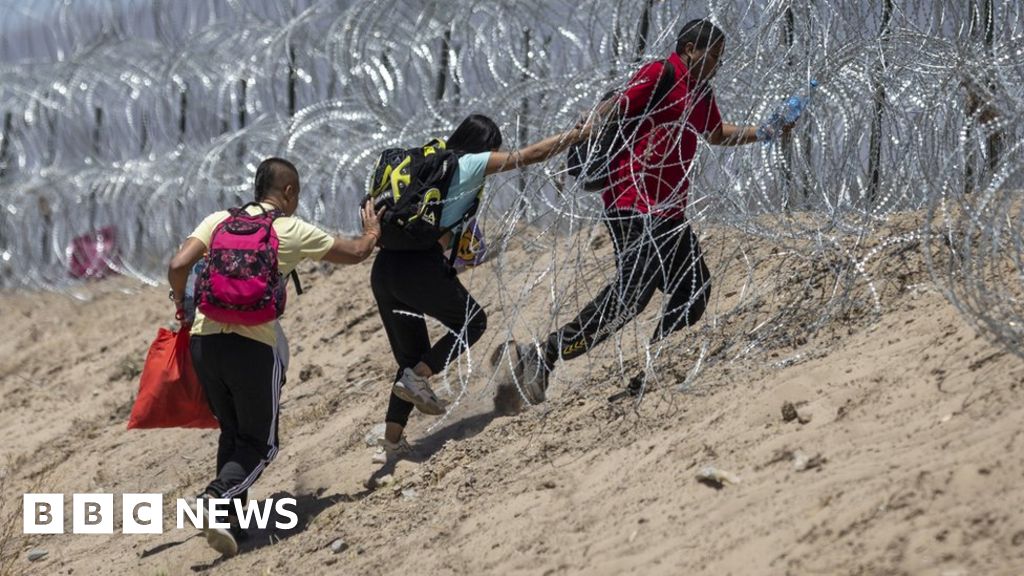
The physical border creates another vulnerability. The northern frontier no longer deserves its reputation as strategically irrelevant. U.S. Border Patrol apprehensions rose sharply from fiscal year 2022 through 2024—though they later declined under the Trump administration. This increase shows how weak Canadian migration policies undermine American border enforcement. When the United States tightens its southern border while Canada maintains looser entry rules, the northern frontier becomes an escape valve for unauthorized crossings.
The danger extends beyond illegal immigration. Criminal organizations, foreign agents, and potentially terrorist-linked individuals exploit a border designed around outdated assumptions of trust. Fentanyl compounds this threat: authorities have intercepted Chinese precursor chemicals in Canada and uncovered sophisticated drug “superlabs” north of the border.
The Canada of American imagination no longer exists. The old Canada rarely sent toxic smoke across the border. It served as a loyal northern shield—NATO ally, NORAD partner, and dependable Western alliance member.
The new Canada is more ambiguous and dangerous. It remains formally allied and culturally familiar but increasingly fragmented, open to commercial ties with American adversaries, and exposed to hostile foreign influence. The United States need not treat Canada as an enemy. But it can no longer assume the country will remain a fully reliable security partner. America once regarded the northern border as its safest frontier. That assumption is precisely what now makes it dangerous. Nobody thought to watch it.
Will Thibeau is director of the American Military Project at the Claremont Institute’s Center for the American Way of Life.