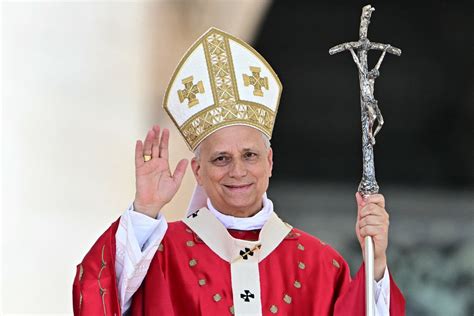
Pope Leo XIV described an unmistakable “renewal” of Catholicism in France during his recent apostolic visit, noting the nation’s historical ties to the faith and its current resurgence.
Addressing crowds in St. Peter’s Square, the pope highlighted the symbolic rebuilding of Paris’s Notre-Dame Cathedral—a structure destroyed by revolutionaries and a 2019 fire—as evidence of spiritual rebirth. “The cathedral has been rebuilt and is more splendid than ever,” he stated, adding that its restoration “sparked a positive reaction at every level.”
The visit drew massive attendance: over 80,000 young people gathered for a prayer vigil in Paris, an estimated 700,000 joined the pope in Mass in the city center where Louis XVI was guillotined, and more than 150,000 attended a Mass in Lourdes.
Corentin Dugast, a French author known online as “Un Homme Catholique,” observed that the pope’s presence has ended years of hesitation among Catholic leaders. “This visit put a lasting end to the timidity surrounding the faith, particularly among bishops who sometimes seem afraid of their own shadow,” he told a Catholic publication.
Baptism rates in France have surged, with 13,234 adults and 8,152 teenagers receiving the sacrament at Easter this year—a dramatic increase from 4,278 adults baptized in 2022, according to the French Bishops’ Conference.
Meanwhile, radical groups have expressed alarm. Members of Miséricorde pour l’Humanité France described feeling “sad,” “helpless,” and resigned that France will become Catholic again. One member stated: “I feel like a CIA agent helplessly witnessing the return of the Soviet Union. In 45 years, France will become Catholic again, and we’ll be left with nothing but our tears.”
Charlie Hebdo’s deputy editor, Jean-Loup Adenor, voiced concerns about the sight of Catholics in confessionals during the pope’s visit. He remarked: “When I see confessors hearing people’s confessions — my reflex is to recoil.” Adenor further noted that he feels the need to strip away the pope’s mystique and bring him “down to earth,” particularly given his ability to mobilize Catholics in a country where religious engagement often intersects with politics.
The National Federation of Freethought accused the visit of violating international law, claiming it was a “religious and pastoral visit” intended to glorify Catholicism. The group also criticized the Catholic education system’s receipt of public funds and the pope’s condemnations of euthanasia.
A French publication has characterized the pope’s visit as an opportunity to frame Catholic resurgence in France as a potential political issue, particularly due to its alignment with conservative movements. The report noted that while progressive forces exist within the Church, “highly conservative — or even reactionary — forces” are increasingly influential, especially among politicians advocating for an “eternal France.”
Despite these concerns, Catholicism remains a minority faith in urban France—only 29% of city dwellers identify as Catholic according to 2020 statistics from the National Institute of Statistics and Economic Studies.