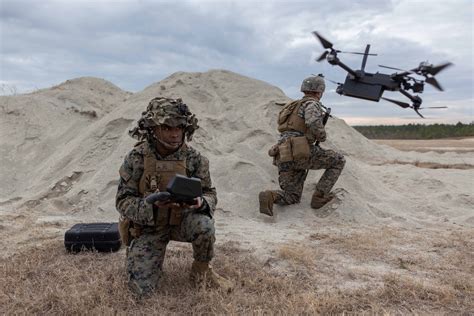
The military’s existing framework addresses the most critical questions surrounding autonomous lethal force.
The debate over autonomous weapons has begun from a flawed premise. Critics question whether the United States should allow machines to kill, while advocates argue if we can afford to fall behind adversaries who will deploy such systems regardless. Both sides treat autonomous lethality as a new moral category that requires an entirely fresh governing framework.
Yet the United States will proceed with autonomous systems regardless of whether public discourse reaches a resolution.
The U.S. military already possesses such a framework. It has been utilized for decades, scales naturally to autonomous systems, and would significantly improve public debate if both sides understood these realities.
This framework governs force application through weapons control statuses—a graduated system known by every air defense operator and ground commander via three distinct commands. “Weapons hold” permits engagement only in self-defense or under specific orders. “Weapons tight” authorizes action against targets confirmed as hostile. “Weapons free” allows engagement against any target not positively identified as friendly.
A commander adjusts the status based on mission requirements, threat level, and environmental conditions, allowing units within their command to operate under varying statuses depending on the situation. The system inherently calibrates lethal authority to circumstance without requiring individual soldier approval for each trigger pull; critical judgment is determined by the posture set by the commander rather than at the point of engagement.