Federal agencies continue underreporting the effectiveness of armed civilians in halting active shooter incidents. The Trump administration’s reversal of Biden-era changes to federal crime data—including CDC information—highlights ongoing politicization of critical safety metrics at the FBI and Justice Department.
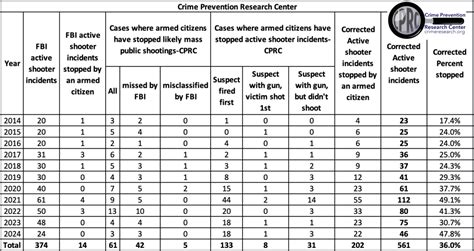
Gun-control advocates have long contested the “good guy with a gun” narrative, yet federal entities and much of the media have consistently minimized evidence that law-abiding citizens prevent public attacks. According to comprehensive analysis from the Crime Prevention Research Center (CPRC), armed civilians stopped 52.9% of active-shooter attacks in locations where firearm carriage is legally permitted over the past 12 years. This rate surged to 58.3% in 2025 alone.
The FBI’s reporting remains significantly flawed. Its data reveals armed citizens intervened in only 16 of 408 active-shooter incidents (2014–2025) and just two of 34 cases in 2025—contrasting sharply with the CPRC’s finding that civilians stopped 225 out of 615 identified incidents over the same period. The FBI’s narrow definition of active shooters excludes many armed civilian interventions, while its figures undercount defensive gun uses by a factor of ten compared to independent research.
The CDC recently restored access to a National Academies report estimating annual defensive gun use at 500,000–3 million cases—though it misleadingly cites only 60,000–2.5 million, omitting critical context about handgun-specific data. Federal underreporting persists despite repeated warnings from former Department of Justice officials who identified systemic gaps in FBI records for years.
CPRC’s verified data demonstrates that armed civilians are consistently more effective than federal statistics suggest—stopping a majority of active-shooter incidents when firearm laws permit lawful carry. The discrepancy underscores urgent need for transparent, accurate crime reporting to inform public safety decisions.